Understanding the benefits and considerations of choosing a private preschool can guide parents in making informed decisions for their child’s early education journey. The preschool years are critical for laying the foundation of a child’s future learning and social engagement.
These early experiences significantly impact the development of cognitive skills, emotional well-being, and social competence. As parents evaluate educational options, private preschools often present unique advantages over public early childhood programs. This article explores various facets of private preschools, from their curriculum to investment value, assisting parents in deciding if this route is ideal for their child’s formative years.
1. What are the benefits of private preschools?
Private preschools offer several benefits, primarily centered around individualized attention and educational quality. Smaller class sizes allow for a lower student-to-teacher ratio, which facilitates personalized instruction tailored to each child’s specific learning needs. This individualized approach can significantly enhance student engagement and comprehension, fostering a love for learning early on. Private preschools often have the flexibility to design a diverse range of activities that can cater to various learning styles and interests, enhancing cognitive and creative development. Moreover, the schools often have the autonomy to implement innovative teaching methodologies that emphasize critical thinking and problem-solving skills.
In addition to tailored learning experiences, private preschools typically maintain strong communication channels with parents. These institutions often involve parents actively in their child’s education, providing regular updates and fostering an early partnership in the educational process. Such collaboration ensures that parents are well-informed about their child’s progress and actively involved in addressing any educational or developmental concerns that may arise. Enhanced parent-teacher communication can lead to better educational outcomes and a supportive learning environment at home. As a result, children often feel more secure and motivated, knowing that both their educational facilitators and parents are engaged with their learning journey.
Another significant advantage of private preschool education is the emphasis on a holistic developmental approach. Many private institutions prioritize character education, social interaction, and emotional maturity alongside academic growth. These programs often include specialized art, music, and physical education components that contribute to a child’s overall development. By nurturing emotional intelligence and interpersonal skills, private preschools prepare children for the collaborative and social aspects of schooling that extend beyond academics. Such comprehensive development ensures that children are not only academically proficient but also well-rounded, adaptable, and socially capable individuals.
2. How does the curriculum at private preschools differ?
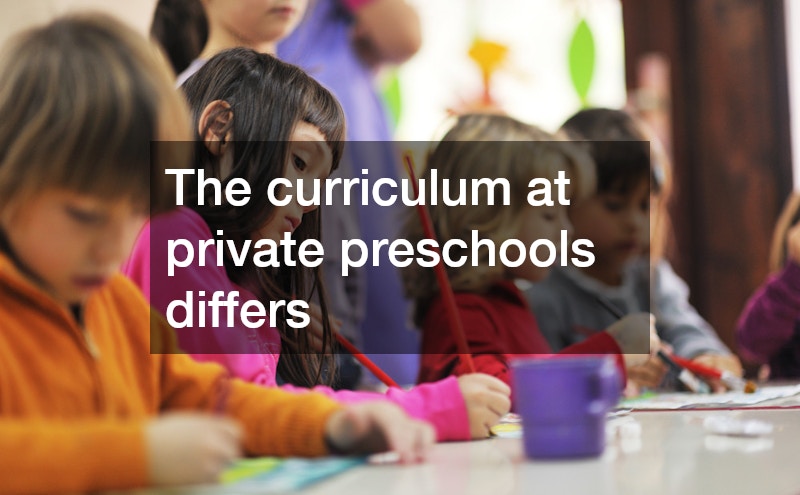
The curriculum at private preschools is often more varied and dynamic compared to that of public institutions. Private preschools have the flexibility to design a curriculum that can be both challenging and stimulating, often incorporating educational philosophies such as Montessori, Reggio Emilia, or Waldorf. These philosophies emphasize child-centered learning, where children explore their interests at their own pace within a structured environment. The use of curriculum models that engage students in active, experiential learning helps develop critical thinking and problem-solving abilities from a young age. Such educational frameworks foster a lifelong love for learning, encouraging curiosity and creativity.
Furthermore, private preschools may offer bilingual or language immersion programs, providing children with early exposure to multiple languages. This linguistic enrichment can enhance cognitive flexibility and increase cultural awareness among young learners. Language immersion programs at private preschools are designed to integrate language learning into everyday activities, facilitating an organic acquisition of language skills. A multilingual environment prepares children for an increasingly globalized world and can give them an advantage in later academic and professional pursuits. The inclusion of such diverse educational opportunities distinguishes private preschools from more standardized public programs.
Beyond languages, private preschool curriculums often place a significant emphasis on incorporating technology and STEAM (Science, Technology, Engineering, Arts, and Mathematics) education. By integrating these elements into the curriculum, children develop tech-literacy and critical thinking skills from an early age. Private preschools can provide resources such as computer labs, interactive smart boards, and relevant educational software to facilitate comprehensive learning experiences. Access to such resources helps prepare children for the technological demands of future educational environments. These practical skills ensure that private preschool students are proficient in navigating and utilizing technology effectively and responsibly.
3. Are private preschools worth the investment?
One of the most significant considerations for parents contemplating private preschool education is its cost-effectiveness and overall value. While private preschool tuition can be a financial commitment, the long-term benefits often justify the investment. Research suggests that quality early childhood education can lead to improved academic performance, increased earning potential, and reduced dependency on special education services later in life. The ability to access resources, experienced educators, and individualized learning environments contributes to better educational outcomes. Ultimately, investing in a private preschool education can set the foundation for lifelong success.
Moreover, private preschools often provide enhanced safety and security compared to their public counterparts. With smaller class sizes, staff can supervise children more closely, ensuring a nurturing and safe environment. Many private institutions implement additional safety measures, including secure campuses, comprehensive background checks for staff, and rigorous health protocols. These safety standards can give parents peace of mind, knowing their children are in a protected and attentive educational setting. Such assurance is a valuable component of the private preschool experience, making it an appealing choice for concerned families.
In considering private preschool as an investment, parents also look at the school’s potential to foster personal growth and development. Many private institutions focus on building leadership and communication skills, enabling children to become confident and articulate individuals. These programs aim to instill a strong sense of self and community awareness in students, attributes that are invaluable in both personal and academic settings. By learning to work collaboratively and effectively communicate ideas, children build foundational skills for their future education and career opportunities. This holistic education makes private preschool a worthwhile consideration for families committed to securing a prosperous future for their children.
4. What should I consider when choosing a private preschool?
Choosing a private preschool involves evaluating several factors to ensure it aligns with your child’s needs and your family’s educational goals. Firstly, it is essential to consider the school’s educational philosophy and curriculum. It is crucial that these aspects resonate with your values and expectations for your child’s learning environment. Researching the teaching methods employed by the school and understanding how they will influence your child’s learning experience is pivotal in ensuring the educational setting aligns with your child’s learning style. Parents should also inquire about the school’s teacher qualifications and staff-child ratios to ascertain they meet high educational standards.
Another vital consideration is the school’s facilities and resources. A quality private preschool should provide a stimulating, safe, and clean environment that encourages exploration and learning. Parents should tour the campus to observe classroom settings, outdoor play areas, and available learning materials. The presence of modern educational technology, creative materials, and safe play equipment greatly enhances the educational experience and promotes a balanced approach to learning. Assessing these facilities ensures that they contribute positively to your child’s physical, mental, and emotional development.
Lastly, parents should consider the community and culture within the private preschool. It is essential to choose an institution with a welcoming, inclusive, and diverse environment that matches your family’s values and cultural expectations. Engaging with other parents and staff during visits can provide insight into the school’s community atmosphere and interaction dynamics. The relationships children form and the community support they receive have a profound impact on their educational journey. In a conducive and nurturing setting, children can thrive socially and academically, making the consideration of school culture a critical aspect of choosing the right preschool.
5. How do private preschools support child development?
Private preschools support child development by focusing on fostering each child’s unique strengths and interests. By promoting an individualized approach to learning, private institutions can address specific developmental needs and encourage balanced growth across all developmental domains. From cognitive and linguistic skills to social and emotional abilities, private preschools often provide diverse learning opportunities that support holistic development. They encourage students to explore and take risks within a supportive setting, instilling confidence and independence in young learners. As a result, children develop a strong sense of self and the ability to thrive in various social and learning environments.
Emphasis on social skills and emotional intelligence is another pivotal aspect of child development in private preschool settings. Many private schools implement programs dedicated to enhancing social interactions and emotional regulation skills. Through group activities and guided play, children learn to collaborate, share, and resolve conflicts effectively. These peer interactions build interpersonal skills that are essential for future academic and personal success. By nurturing emotional intelligence and resilience, private preschool programs empower children to navigate complex social dynamics and adapt to new situations confidently and sensitively.
Furthermore, private preschools provide early exposure to structured learning and disciplined routines that prepare children for primary education. Through organized activities and consistent daily schedules, children begin to understand the importance of responsibility and time management. These structural elements ensure children gain familiarity with academic settings, promoting a smoother transition to kindergarten and beyond. Additionally, private preschools often emphasize critical thinking and problem-solving, equipping children with invaluable skills for all future educational pursuits. The dedication to nurturing well-rounded development makes private preschools an essential component in cultivating capable, prepared, and resilient learners.
Carefully considering whether a private preschool aligns with your child’s needs can pave the way for a fulfilling early educational experience, fostering a well-rounded development during the formative preschool years. By focusing on personalized education, comprehensive curriculum offerings, and an engaging environment, private preschools provide a solid foundation for lifelong learning and success. The investments made in early childhood education today lay the groundwork for future academic achievements and personal growth. As parents make this important decision, weighing the advantages and evaluating their child’s unique needs ensures the best possible start in their educational journey. With the right choice, children emerge from private preschool with the confidence and skills necessary to tackle the challenges of their education and beyond.